

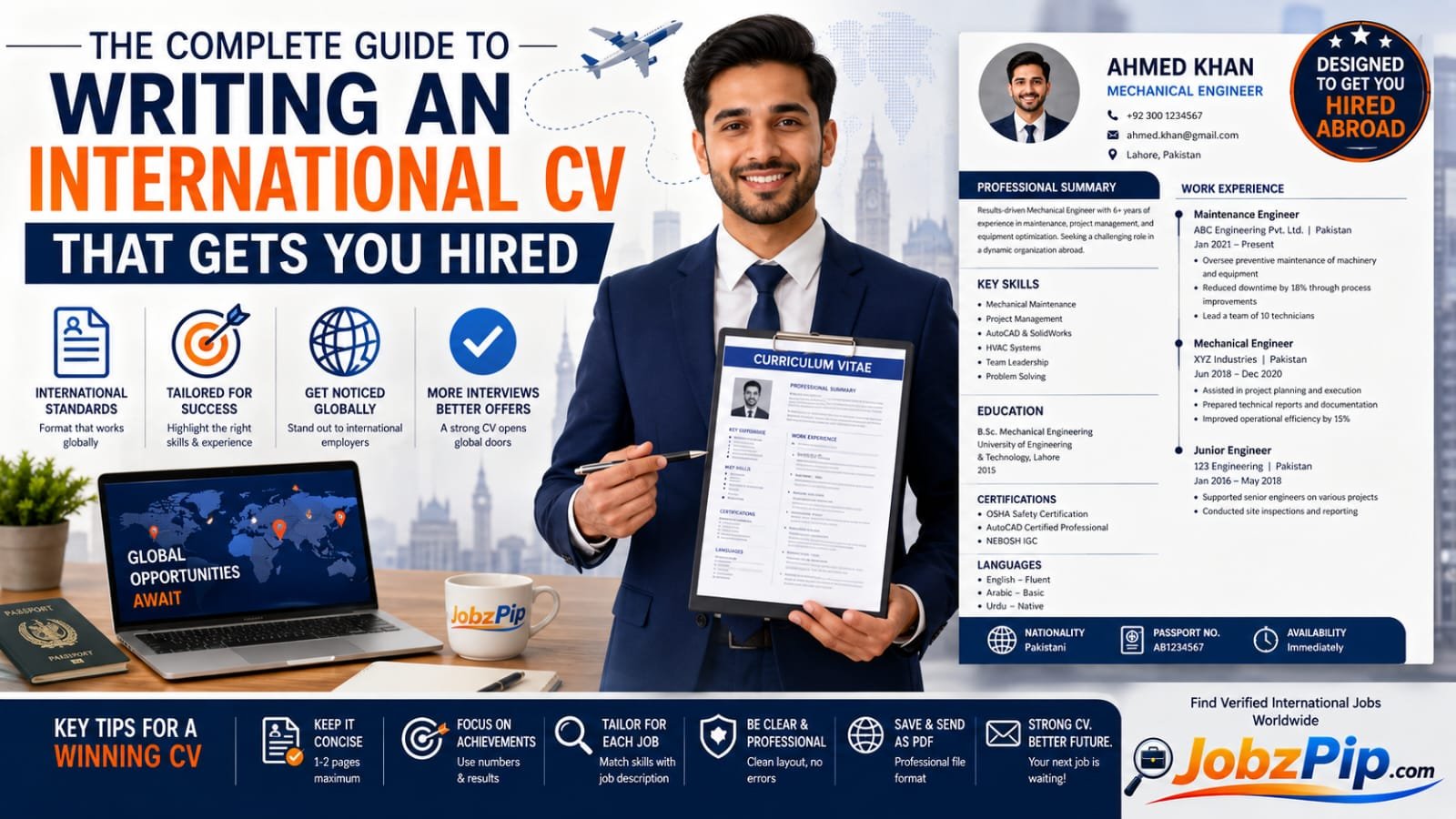
Your CV is often the very first impression an international employer will have of you, and in a competitive global job market, you sometimes have less than ten seconds to catch a recruiter’s attention before they decide whether to keep reading or move on to the next applicant. A CV that works perfectly well for a local job application can fail completely when used for an international one, simply because different countries and industries have different expectations about format, length, and content.
This guide walks you through exactly how to build a CV that stands out to international employers and recruitment agencies, whether you’re applying for a job in the Gulf, Europe, North America, or anywhere else in the world.
Understand That “International” Doesn’t Mean One Format
One of the biggest misconceptions job seekers have is thinking there’s a single universal CV format that works everywhere. In reality, expectations vary quite a bit by region. American and Canadian employers typically want a resume, not a CV, meaning a concise one to two page document focused on achievements and measurable results. European employers, particularly in Germany, often expect a more detailed CV that may include a photo and personal details like date of birth. Gulf country employers usually want something closer to the American resume style, but recruitment agencies often ask for additional personal and passport details upfront.
Before you finalize your CV, research the norm for your specific target country and adjust accordingly. That said, there are universal principles that improve any international CV, which we’ll cover in detail below.
Structure Your CV for Maximum Impact
A strong international CV typically follows this structure, in this order:
- Contact information and a professional summary
- Key skills or core competencies
- Work experience, listed in reverse chronological order
- Education and qualifications
- Certifications and licenses
- Languages
- Additional information (visa status, availability, references)
Let’s break down each section in detail.
Contact Information and Professional Summary
Your contact section should include your full name, phone number with country code, professional email address, and city and country of residence. You generally don’t need to include your full home address for international applications; city and country are sufficient.
Below your contact details, include a three to four line professional summary. This is your elevator pitch. It should clearly state your profession, years of experience, key skills, and what you’re looking for. For example: “Experienced HVAC technician with 6 years in commercial and residential installation across Pakistan and the UAE. Certified in refrigeration systems, seeking a challenging role in Qatar’s growing construction sector.”
Avoid generic summaries like “hardworking and dedicated professional seeking opportunities.” Recruiters read hundreds of CVs and can spot generic filler instantly.
Key Skills Section
Right after your summary, include a bullet-point list of six to ten key skills relevant to the job you’re applying for. This section helps recruiters, and increasingly, automated applicant tracking systems, quickly identify whether you’re a match for the role. Tailor this list for each application based on the specific job description.
Work Experience
This is the heart of your CV and deserves the most attention. For each role, include your job title, company name, location, and dates of employment. Under each position, use three to five bullet points that focus on achievements and responsibilities, not just a list of duties.
Instead of writing “responsible for managing a team,” write “Led a team of 12 warehouse staff, improving order fulfillment speed by 20% over six months.” Numbers and measurable outcomes make a massive difference in how credible and impressive your experience appears.
If you’re early in your career or switching industries, focus on transferable skills and any relevant training, internships, or volunteer work that demonstrates your capabilities.
Education and Qualifications
List your highest qualification first, followed by earlier degrees or certifications if relevant. Include the institution name, location, and year of completion. For many international jobs, especially in the Gulf and parts of Europe, your educational certificates will need to be attested or verified by relevant authorities before your visa can be processed, so make sure the qualifications listed on your CV match your official documents exactly.
Certifications and Licenses
For technical and skilled trade roles, certifications often matter as much as, or more than, formal education. List any professional certifications relevant to your field, such as welding certifications, safety training (like OSHA or NEBOSH), IT certifications, or professional licenses like nursing registration. Include the issuing body and date of certification.
Languages
International employers value language skills highly, especially English proficiency and any additional languages relevant to the destination country, such as Arabic for Gulf countries or German for jobs in Germany. Rate your proficiency honestly using standard descriptors like native, fluent, intermediate, or basic.
Additional Information
This section can include your current visa status if relevant, your availability to start, willingness to relocate, and whether you have a valid passport with sufficient validity remaining. Some Gulf country applications also ask for details like nationality and marital status; include these only if specifically requested by the employer or agency.
Formatting Rules That Actually Matter
Keep your CV to a maximum of two pages unless you’re in a highly senior or academic role that genuinely requires more space. Use a clean, professional font like Calibri, Arial, or Times New Roman in size 10 to 12. Avoid excessive colors, graphics, or unusual layouts, especially if your CV might be processed by applicant tracking software, which can struggle to read complex designs.
Save and send your CV as a PDF unless specifically asked for a Word document, since PDFs preserve formatting across different devices and software. Name your file professionally, something like “YourName_CV_JobTitle.pdf” rather than a generic filename like “resume final version 2.pdf.”
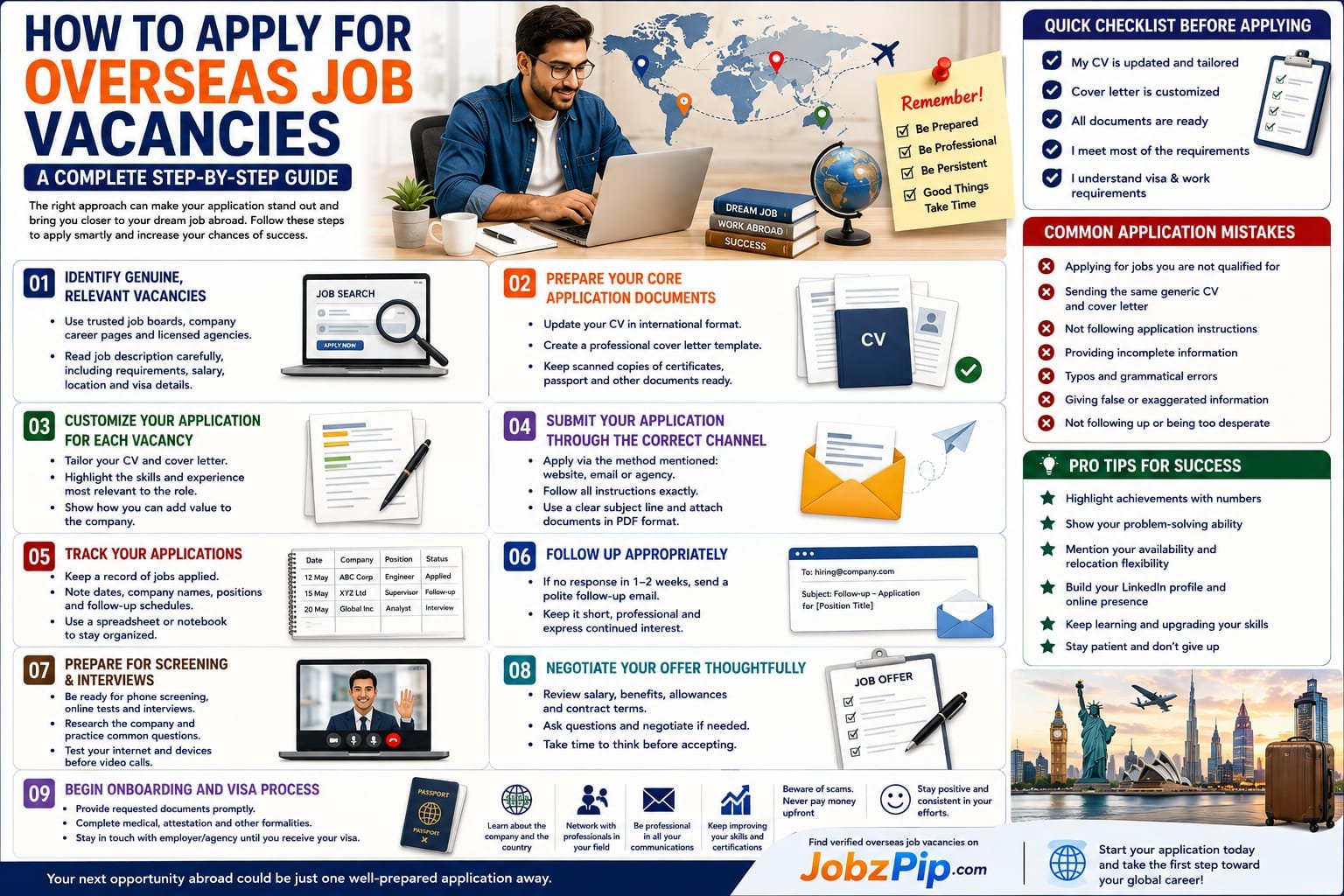
Common Mistakes That Get CVs Rejected
Even strong candidates lose opportunities because of avoidable CV mistakes. Watch out for these:
- Spelling and grammar errors, which signal carelessness to recruiters
- Using the same generic CV for every application instead of tailoring it
- Including irrelevant personal information like religion or overly detailed family background unless specifically required
- Listing responsibilities without any measurable achievements
- Using an unprofessional email address
- Submitting a CV longer than necessary, packed with unnecessary detail
- Forgetting to update contact information after changing your phone number
Tailoring Your CV for Each Application
It might feel time-consuming, but adjusting your CV for each specific job significantly increases your chances of getting shortlisted. Read the job description carefully and mirror the language used for skills and requirements where genuinely applicable to your experience. If a job posting emphasizes “team leadership” and “budget management,” and you have relevant experience, make sure those exact phrases appear somewhere in your CV, since many companies use automated systems that scan for specific keywords before a human ever sees your application.
Writing a Strong Cover Letter to Match
While not always required, a well-written cover letter can significantly strengthen your application, particularly for professional and skilled roles. Keep it to three or four short paragraphs: an introduction stating the role you’re applying for, a paragraph highlighting your most relevant experience and why you’re a strong fit, a brief note on why you’re interested in that specific country or company, and a polite closing with your availability.
Final Thoughts
Your CV is a marketing document, not just a record of your work history. Every line should work to convince a recruiter that you’re worth interviewing. Take the time to structure it properly, tailor it for each application, and eliminate errors before you hit send. A well-crafted international CV won’t guarantee you a job, but a poorly written one can absolutely cost you opportunities you were otherwise qualified for.
Invest a few extra hours getting this document right. It’s one of the highest-return activities in your entire job search process.
Browse the latest international job openings on Jobzpip and put your newly polished CV to work today.

Leave a Reply