
Getting invited to an interview for an international position is genuinely exciting, it means your CV made it through the initial screening and an employer thinks you might be the right fit. But this is also the stage where many otherwise qualified candidates lose out, simply because they weren’t fully prepared for the specific dynamics of an international, often remote, interview process. This guide covers everything you need to know to walk into your interview, whether by video call or in person, feeling confident and prepared.
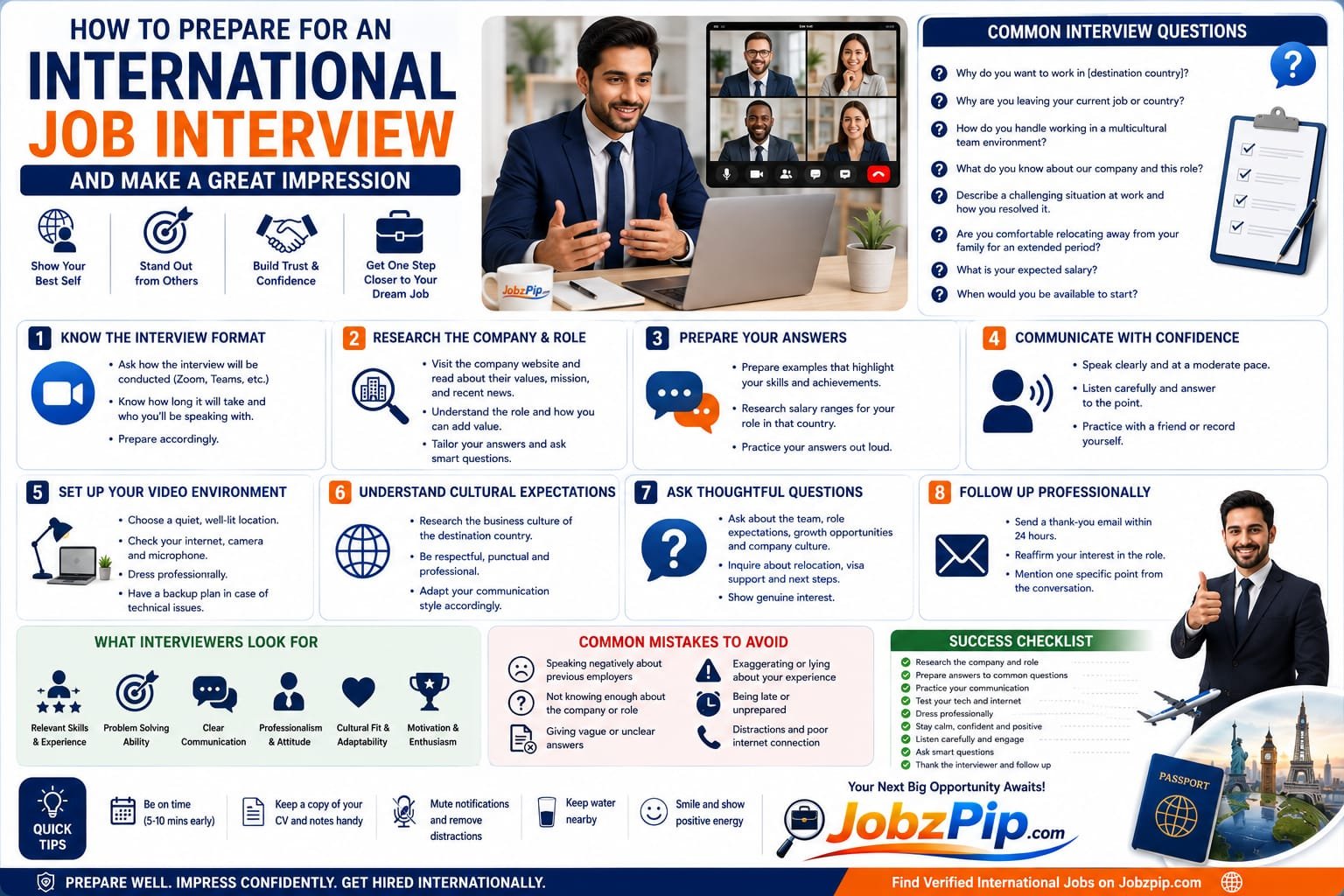
Understand the Format You’ll Be Dealing With
Most international interviews today happen via video call, at least in the initial stages, using platforms like Zoom, Microsoft Teams, or Google Meet. Some employers or agencies conduct a phone screening first, followed by a more detailed video interview, and occasionally a final in-person interview if you’re already in the destination country or if the employer has a local representative conducting interviews in your home country.
Whatever the format, ask in advance exactly how the interview will be conducted, how long it’s expected to last, and who you’ll be speaking with. This simple step alone helps reduce anxiety and lets you prepare appropriately.
Research the Company and Role Thoroughly
Nothing signals genuine interest like walking into an interview with real knowledge about the company you’re hoping to join. Spend time on the company’s official website, read about their history, values, and recent projects or news. If you’re applying through a recruitment agency for a specific employer, ask the agency for as much background information as they can share about the company and the exact role.
Understanding the company’s business helps you tailor your answers and ask more informed, relevant questions during the interview, which consistently impresses interviewers far more than generic responses.
Prepare for Common International Interview Questions
While every interview is different, certain questions come up repeatedly in international job interviews, and preparing thoughtful answers in advance will help you respond naturally and confidently rather than fumbling under pressure.
Expect questions like:
- Why do you want to work in [destination country]?
- Why are you leaving your current job or country?
- How do you handle working in a multicultural team environment?
- What do you know about our company and this role?
- Describe a challenging situation at work and how you resolved it
- Are you comfortable relocating away from your family for an extended period?
- What is your expected salary?
- When would you be available to start if offered the position?
For the salary question specifically, research typical salary ranges for your role and experience level in the target country beforehand, so you can give a realistic, confident answer rather than guessing or underselling yourself.
Practice Clear, Confident Communication
Language and communication style matter enormously in international interviews, especially if you’re not a native English speaker and the interview will be conducted in English. This doesn’t mean you need to sound like a native speaker, but it does mean practicing clear, well-paced speech is worthwhile. Avoid speaking too quickly out of nervousness, and don’t be afraid to briefly pause and gather your thoughts before answering a question rather than rushing into a response.
If possible, practice with a friend or family member beforehand, or even record yourself answering common interview questions and review the recording. This can reveal habits you weren’t aware of, like filler words, unclear pronunciation, or answers that ramble without a clear point.
Set Up Your Video Interview Environment Properly
For video interviews, your environment matters more than many candidates realize. Choose a quiet, well-lit location with a neutral, tidy background. Test your internet connection, camera, and microphone well before the scheduled time, ideally doing a full test call with a friend the day before. Position your camera at eye level rather than looking down at your laptop, and dress professionally exactly as you would for an in-person interview, even if only your upper body will be visible.
Have a backup plan in case of technical issues: know the interviewer’s phone number or alternative contact method if your video connection fails, and make sure your device is fully charged or plugged in.
Understand Cultural Expectations of the Destination Country
Different countries and cultures have different expectations around interview etiquette, and being aware of these can help you make a stronger impression. Gulf country employers often value a respectful, somewhat formal tone throughout the interview. European interviewers, particularly in Germany, tend to appreciate direct, specific answers backed by concrete examples rather than vague generalities. Interviewers in North America often place significant value on confidence and the ability to clearly articulate your personal achievements and impact.
If you’re unsure about specific cultural expectations for your target country, a little research into general business culture norms for that country can go a long way in helping you calibrate your tone and approach appropriately.
Prepare Thoughtful Questions to Ask the Interviewer
Nearly every interview ends with the interviewer asking if you have any questions. This is not the moment to say “no, I think you’ve covered everything.” Prepare two or three genuine, thoughtful questions in advance, such as asking about the team you’ll be working with, what a typical day in the role looks like, opportunities for growth within the company, or details about the relocation and visa support process. Good questions demonstrate genuine interest and help you gather information that will help you evaluate the offer if one comes.
Address Relocation and Visa Questions Confidently
International employers will often want to understand your situation regarding relocation logistics. Be prepared to discuss your current visa or passport status, your flexibility around start dates, and whether you have any dependents who would also need to relocate. Being clear, honest, and organized about these practical details reassures employers that you’ve thought seriously about the move and are genuinely prepared to follow through.
Follow Up Professionally After the Interview
Within 24 hours of your interview, send a brief, polite thank-you email to your interviewer or the recruitment agency coordinating the process. Thank them for their time, briefly reaffirm your interest in the role, and mention one specific point from the conversation that stood out to you. This small gesture keeps you top of mind and reflects professionalism, which can make a meaningful difference when an employer is deciding between similarly qualified final candidates.
Common Mistakes to Avoid
Some mistakes come up repeatedly in international interviews and are entirely avoidable with preparation. Avoid badmouthing previous employers, even if you had genuinely difficult experiences; focus instead on what you learned and how you grew professionally. Don’t appear unprepared about basic facts regarding the company or role. Avoid vague, generic answers that could apply to any job or company. Never lie or exaggerate your qualifications, since this often becomes apparent during the interview or, worse, after you’ve already started the job.
Final Thoughts
Interview preparation is one of the highest-leverage activities in your entire international job search. A candidate with slightly less experience but excellent interview preparation will often be selected over a more experienced candidate who appears unprepared or disorganized during the conversation. Take the time to research thoroughly, practice your answers, test your technology, and present yourself as someone who has genuinely thought through this decision and is ready to follow through professionally.
Walking into your interview well-prepared won’t just improve your chances of getting the offer, it will also help you feel calmer and more like yourself throughout the conversation, which interviewers can always sense.
Found the right opportunity? Browse verified international vacancies on Jobzpip and start preparing for your next big career move.

Leave a Reply