

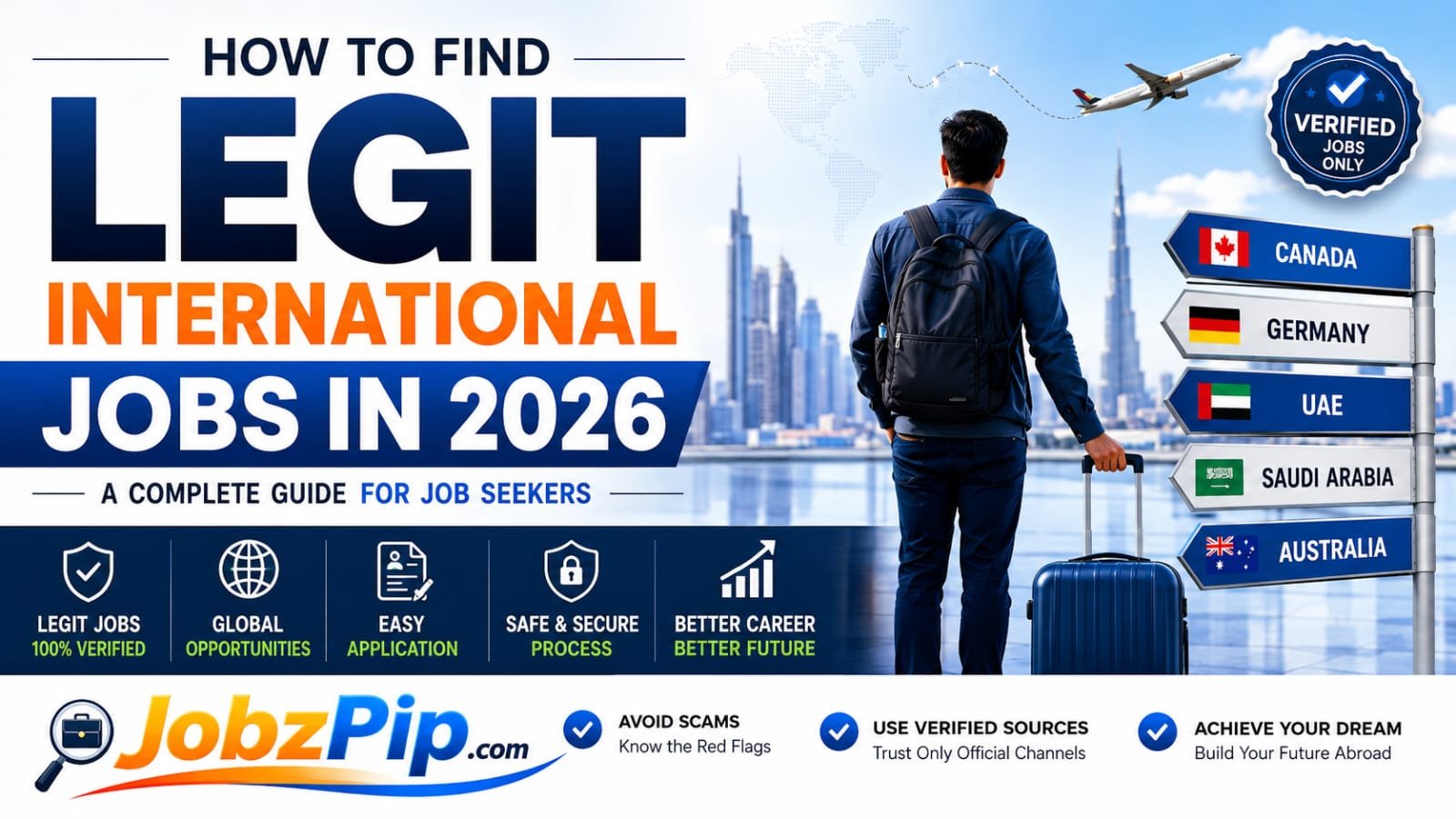
If you have ever typed “jobs abroad” into Google late at night, wondering whether that dream of working in Dubai, Canada, Germany, or Saudi Arabia could actually happen for you, you are not alone. Every year, millions of people search for international job opportunities, hoping to earn better salaries, gain global work experience, and build a more secure future for their families. But here is the hard truth: the internet is flooded with fake job postings, recruitment scams, and “too good to be true” offers that end up costing people their savings instead of giving them a career.
At Jobzpip, we talk to job seekers every single day who ask the same question: “How do I know if an international job offer is real?” This guide is written to answer exactly that, step by step, in plain language, without the jargon.
Why International Jobs Are More Popular Than Ever
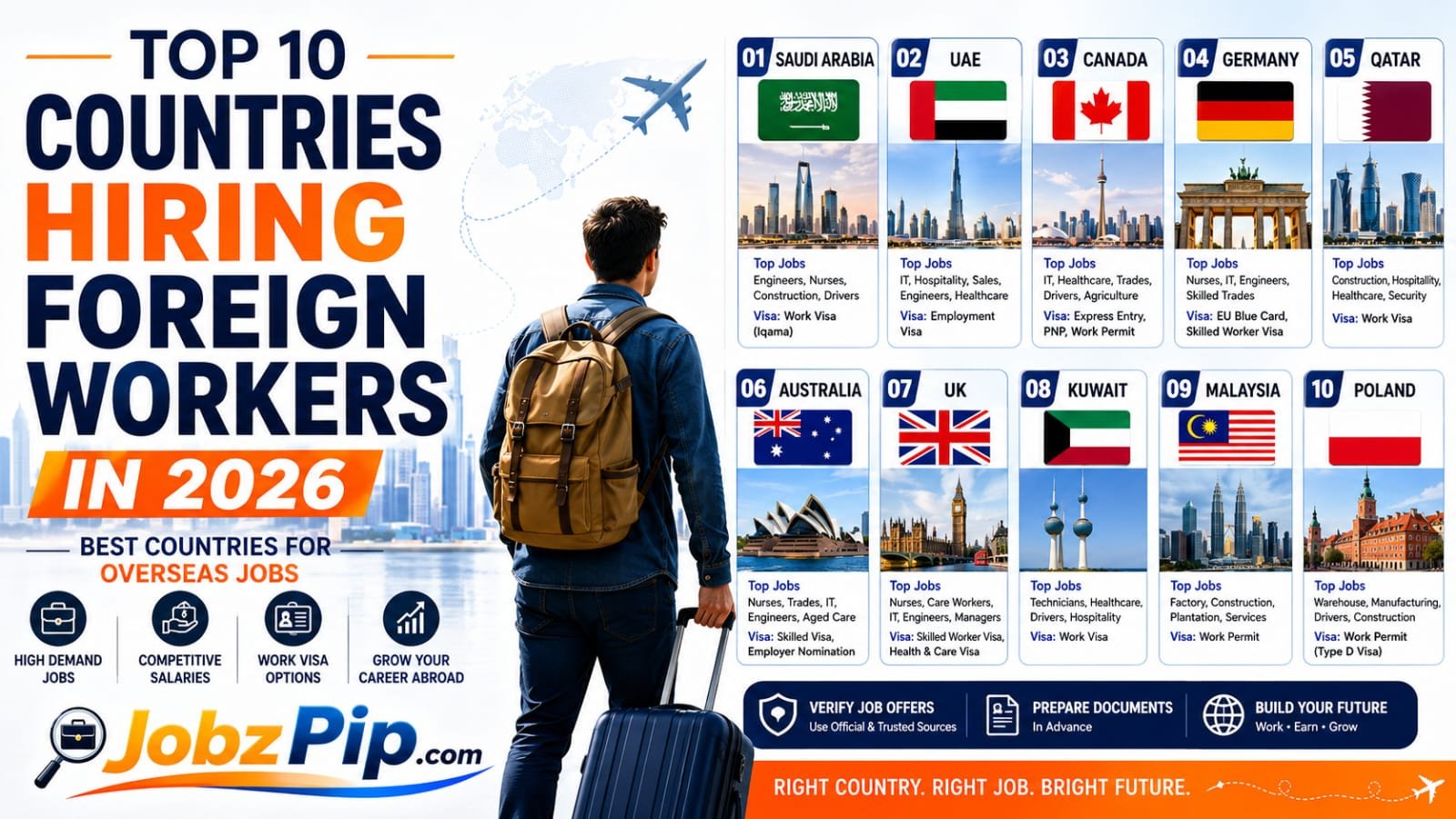
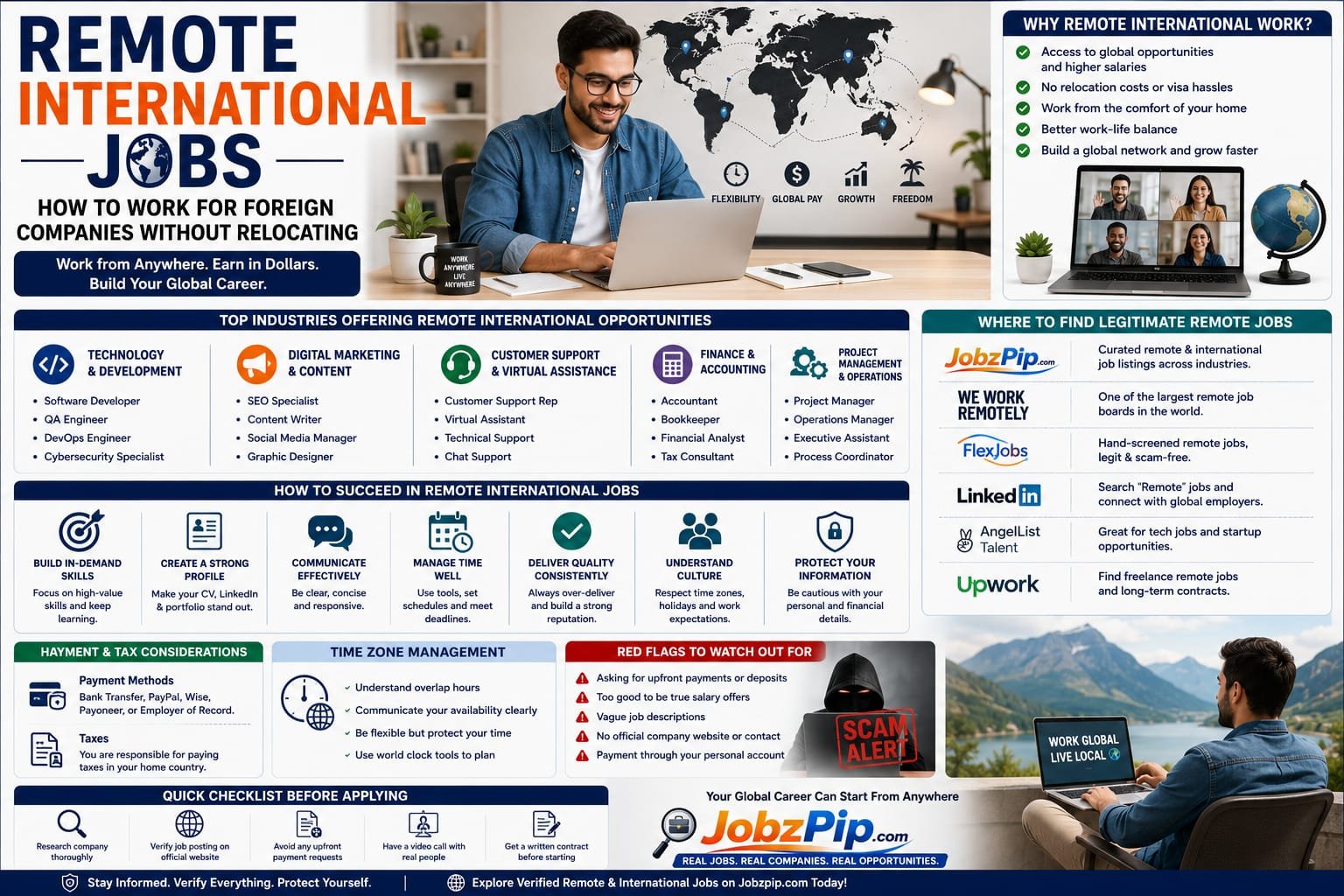
The global job market has changed dramatically over the last few years. Remote work became normal, companies started hiring across borders more easily, and many countries opened up new visa categories specifically to attract skilled and semi-skilled foreign workers. Countries like Canada, Germany, Australia, and the Gulf states are dealing with labor shortages in construction, healthcare, hospitality, IT, and logistics. This has created a genuine demand for foreign workers, which is good news for job seekers, but it has also created an opportunity for scammers to take advantage of desperate applicants.
Understanding this bigger picture is important. It tells you that real opportunities do exist, in large numbers, but you need to know how to separate them from the fake ones.
Step 1: Understand What a Legitimate Job Offer Looks Like
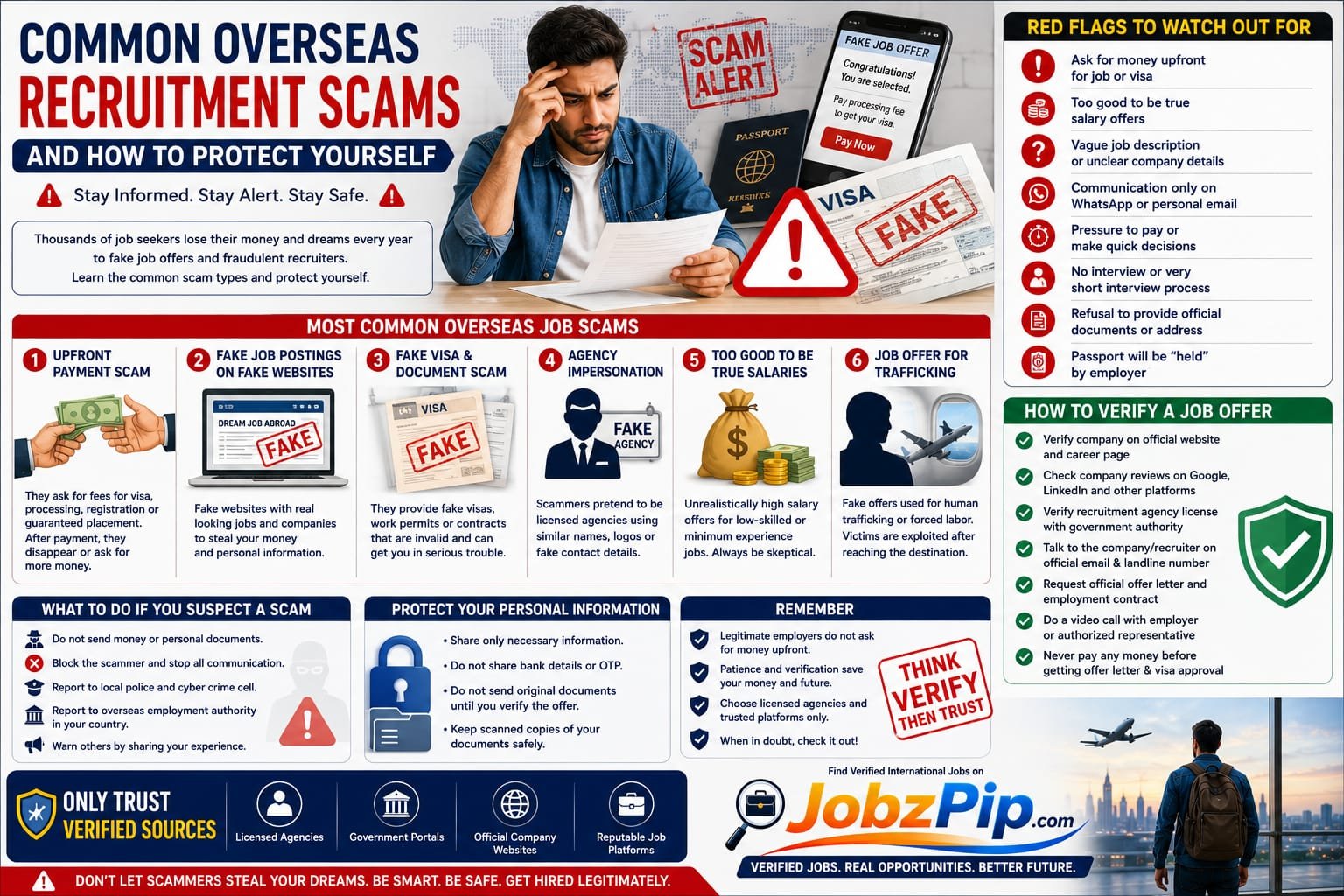
A real international employer will almost never ask you to pay money upfront for a job. This is the single most important rule to remember. Legitimate recruitment agencies charge the employer, not the candidate, in most licensed and regulated markets. If someone asks you to pay a “processing fee,” “visa fee,” or “registration fee” before you have even been offered a position, treat it as a major red flag.
Genuine job offers usually come with:
- A formal offer letter on company letterhead, with a verifiable company name and address
- A clear job title, salary, and contract duration
- Contact details that match the company’s official website
- An interview process, even if conducted online
- No pressure to make immediate payments
Step 2: Use Verified Platforms and Government-Approved Channels
Many countries have official portals or government-regulated agencies that list verified international vacancies. For example, workers heading to Gulf countries can check whether a recruitment agency is licensed by their home country’s overseas employment bureau. In Pakistan, this would be the Bureau of Emigration and Overseas Employment (BE&OE); similar bodies exist in India, the Philippines, Bangladesh, and Nepal.
Beyond government channels, reputable international job boards and company career pages are your safest bet. Always cross-check a job listing by searching the company name directly and visiting their official website’s careers section. If the job isn’t listed there too, be cautious.
Step 3: Research the Employer Thoroughly
Before you get excited about any offer, take fifteen minutes to research the company. Search for the company name along with words like “reviews,” “scam,” or “complaints.” Check if they have a LinkedIn page with real employees, a functioning website, and a physical office address you can verify on Google Maps. Genuine multinational employers have a digital footprint that spans years, not a website that was created last month.
If you’re applying through a recruitment agency rather than directly with an employer, verify the agency’s license number with the relevant regulatory authority in your country. Licensed agencies are legally accountable, which gives you protection if something goes wrong.
Step 4: Know the Common Red Flags of Job Scams
Over the years, certain patterns have repeated themselves again and again in overseas job scams. Learning to recognize them can save you a lot of heartache and money.
Be suspicious if:
- The salary offered seems unusually high for the job description and required skills
- Communication happens only through WhatsApp or personal email, never official company channels
- You are asked to send your passport copy and money in the same message
- The recruiter avoids video calls or refuses to answer specific questions about the role
- You are promised a visa “guaranteed” without any interview or selection process
- The contract has no reference to labor laws of the destination country
Step 5: Understand the Real Recruitment Process
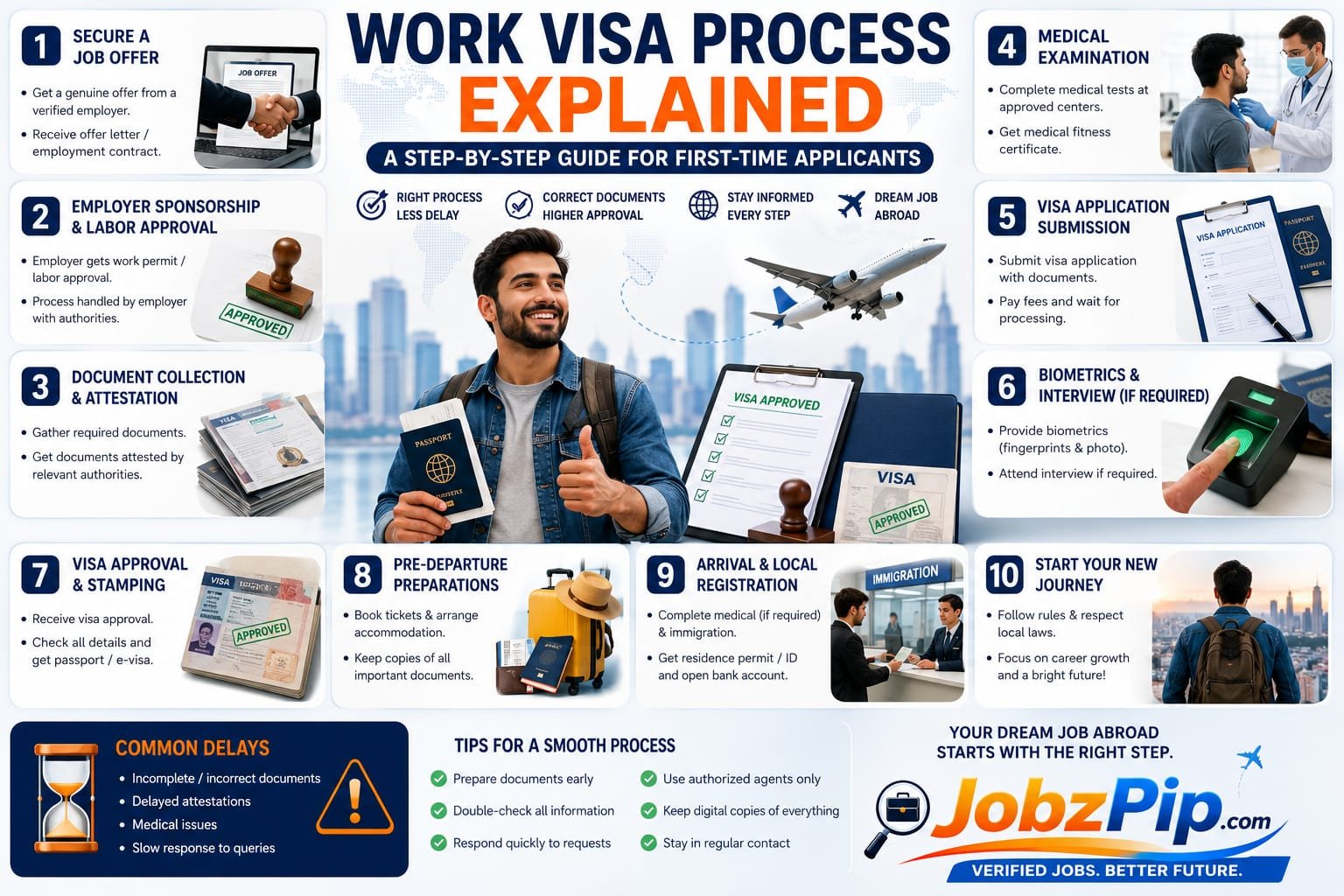
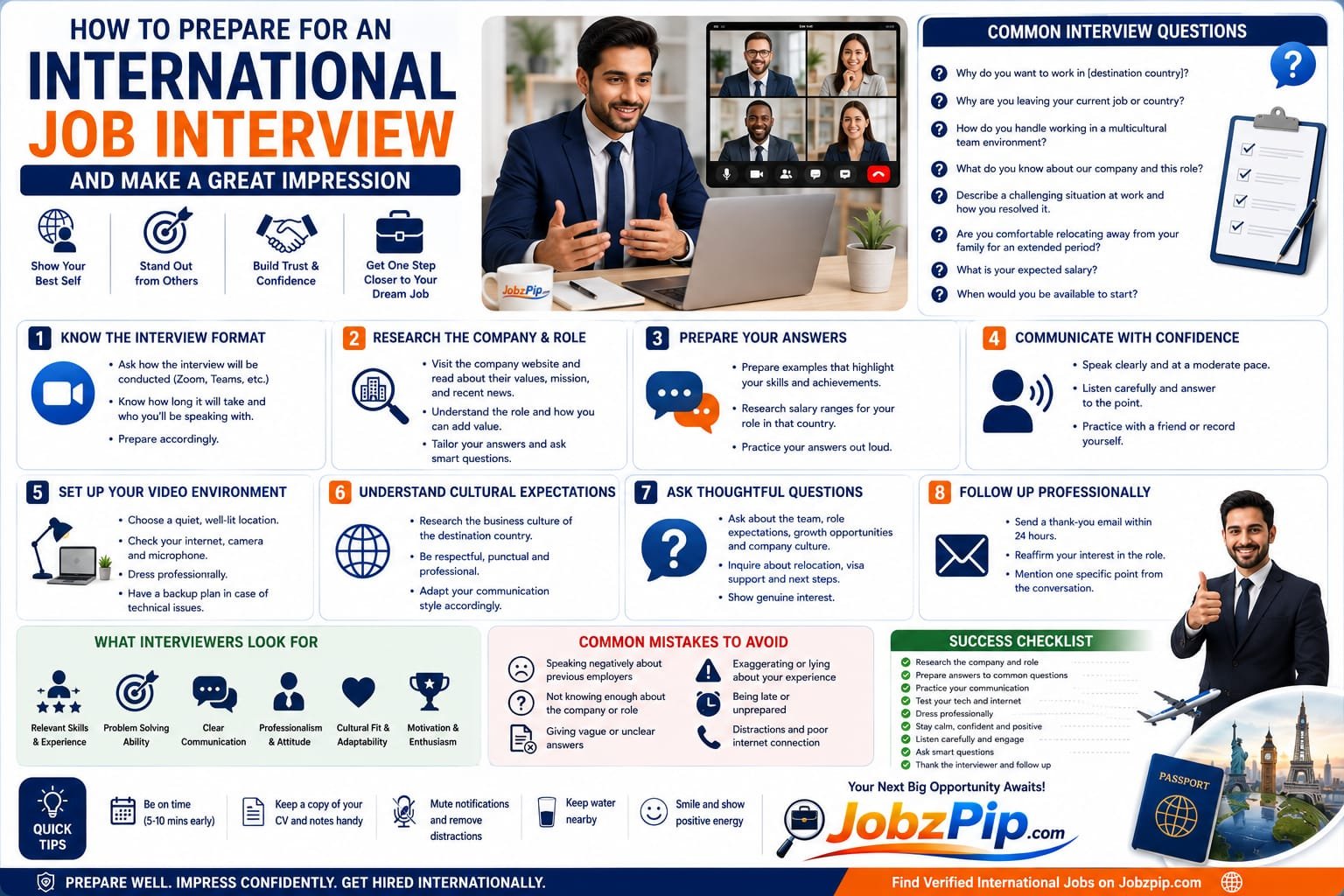
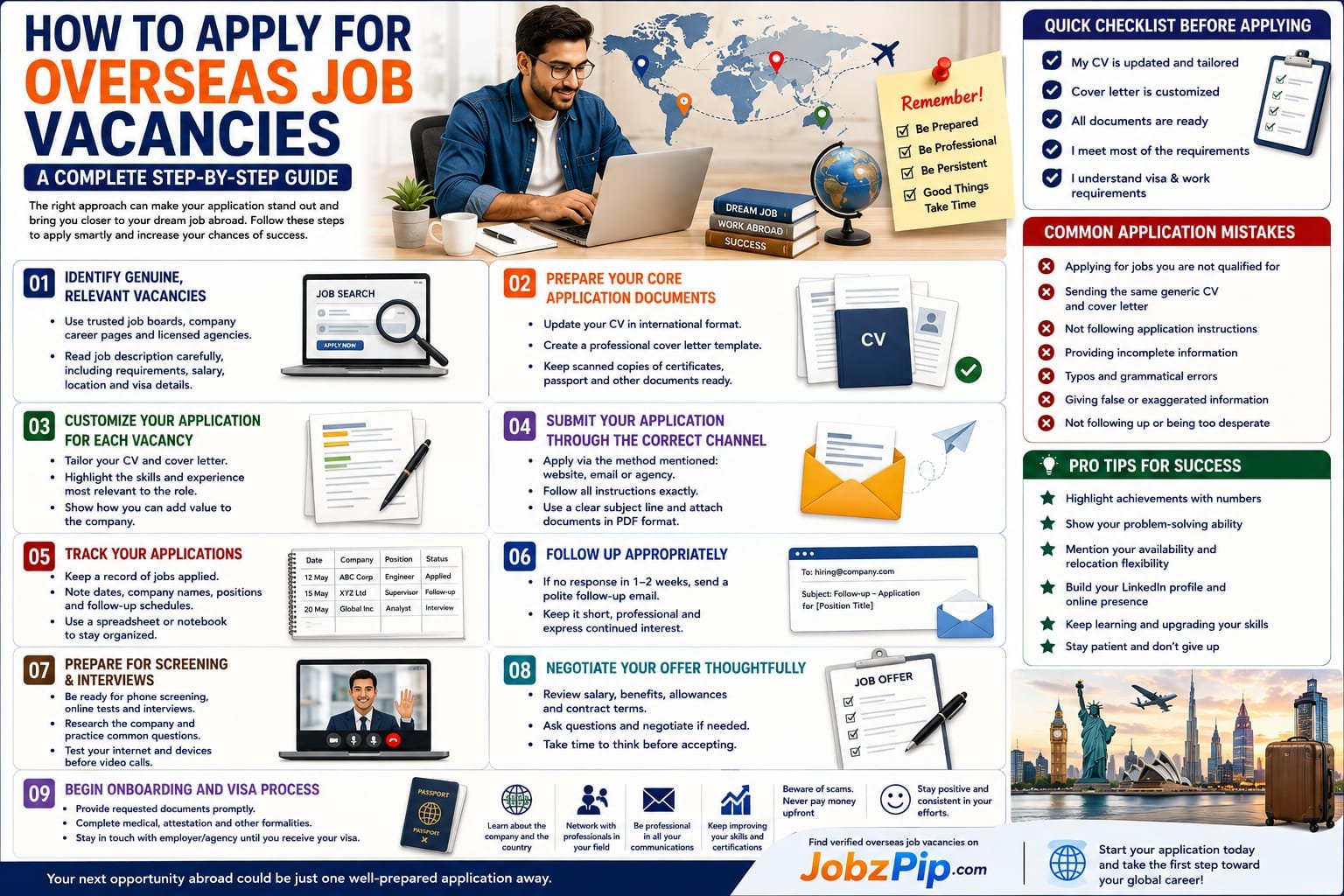
A legitimate international hiring process typically follows a clear pattern. First, you apply for a specific role, usually through an online application or a recruitment agency. Next, your CV is shortlisted, and you go through one or more interviews, often conducted via video call. If successful, you receive a written offer letter outlining salary, benefits, accommodation (if applicable), and contract length. Only after accepting the offer does the visa and work permit process begin, usually handled by the employer or their appointed agency, not paid for entirely out of your own pocket in most regulated markets.
Some countries and industries do have legitimate processing fees for visas, medical tests, or police clearance certificates, and these are usually paid to government departments or medical centers directly, not to a random individual claiming to be a recruiter. Knowing this distinction protects you from being manipulated into paying the wrong person.
Step 6: Prepare Your Documents in Advance
Once you start seriously applying for international jobs, having your documents ready will save you time and help you respond quickly to genuine opportunities. Common documents needed include:
- A valid passport with at least six months validity
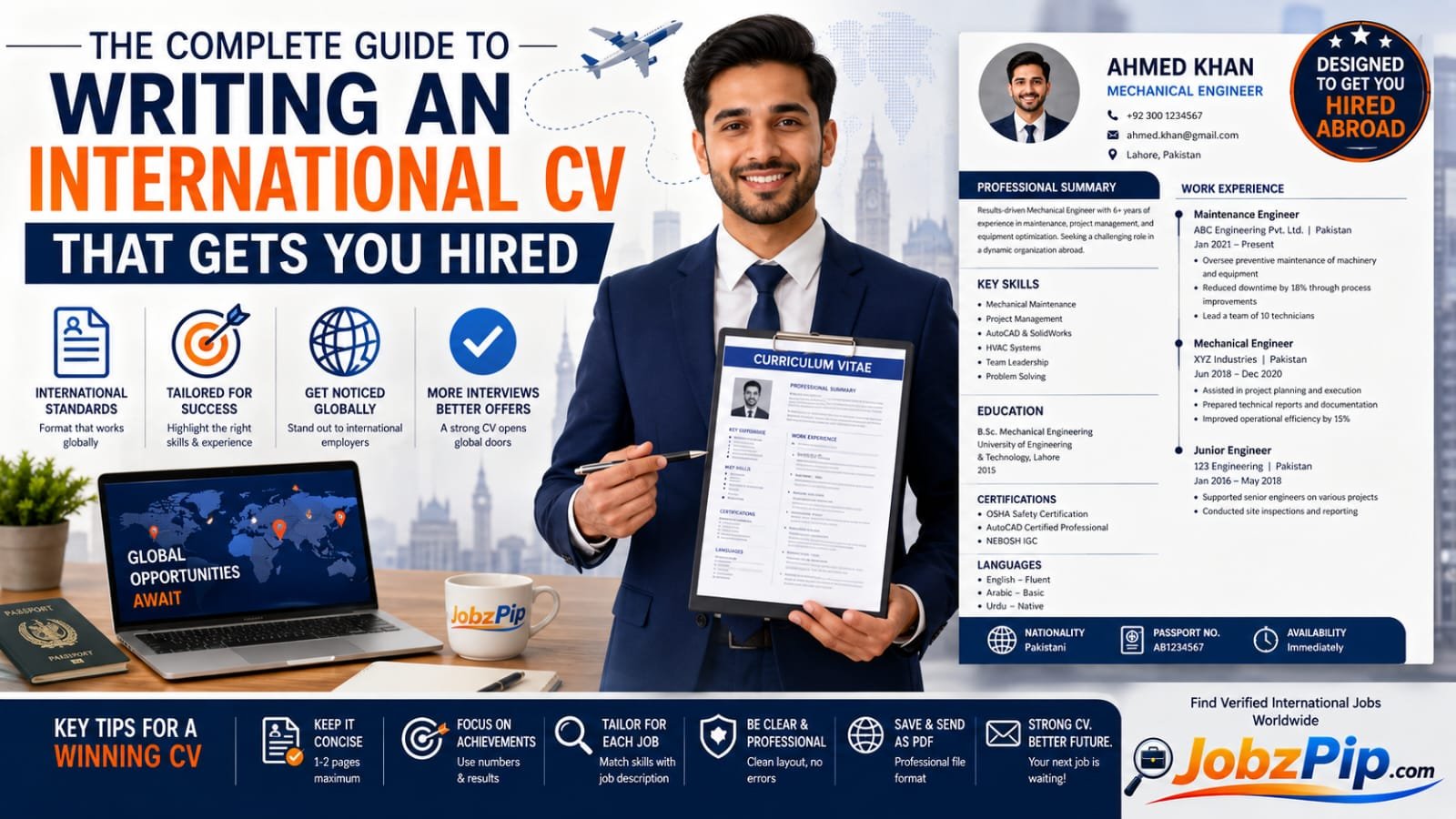
- An updated CV formatted for international standards
- Educational certificates and professional qualifications, sometimes requiring attestation
- Police clearance certificate
- Medical fitness certificate (for many Gulf and some European jobs)
- Passport-sized photographs meeting specific country requirements
Having these ready means you won’t lose out on time-sensitive opportunities while scrambling to arrange paperwork.
Step 7: Build Skills That Are in Demand Internationally
Not every job requires a university degree. In fact, some of the highest-demand international jobs right now are in skilled trades: electricians, welders, plumbers, HVAC technicians, and heavy machine operators are consistently sought after in Gulf countries, and increasingly in Europe and Canada through skilled trades immigration programs. Healthcare workers, including nurses and caregivers, are in extremely high demand in the UK, Germany, and Gulf nations.
If you’re still building your career, consider getting certified in a trade or skill that has clear international demand. Certifications from recognized bodies carry more weight than informal experience alone when applying abroad.
Step 8: Network and Follow the Right Sources
Join LinkedIn groups, Facebook communities, and forums specific to overseas employment for your target country or industry. People who have already gone through the process often share updated, practical advice about which agencies are trustworthy and which companies are currently hiring. Following official embassy pages and labor ministry updates for your target country also keeps you informed about policy changes that might affect your application.
At Jobzpip, we regularly update our listings with verified international vacancies across multiple industries and countries, so make it a habit to check back regularly rather than relying on a single source.
Final Thoughts
Finding a legitimate international job is absolutely possible in 2026, and thousands of people successfully make this move every month. The key is patience, verification, and refusing to let excitement override caution. Never pay money to secure a job before you have a written offer from a verifiable employer, always double-check agencies against official licensing bodies, and take the time to research every opportunity that comes your way.
Your dream job abroad is out there. Approach the search with the same seriousness you’d bring to any major life decision, and you’ll significantly increase your chances of landing a genuine, well-paying position instead of falling victim to a scam.
Looking for verified international job listings? Browse the latest opportunities on Jobzpip and take the next step in your career abroad.



Leave a Reply