

Meta Description: Want to work for international companies without moving abroad? Learn how to find, apply for, and succeed in remote international jobs.
Focus Keyword: remote international jobs, work from home for foreign companies, online jobs abroad
Not everyone wants to, or is able to, physically relocate abroad for work. Family commitments, visa complications, or simply a preference to stay close to home lead many talented professionals to look for a different path: working remotely for international companies while remaining in their home country. This approach has grown dramatically over recent years, and for the right skill sets, it can offer many of the financial benefits of an international salary without the significant lifestyle disruption of relocation. This guide covers everything you need to know about finding and succeeding in remote international jobs.
Why Remote International Work Has Grown So Much
The shift toward accepting remote work became mainstream, and companies discovered that many roles, particularly in technology, customer service, design, writing, and digital marketing, could be performed just as effectively from anywhere in the world. This shift opened up international talent pools to companies who previously only considered local candidates, and simultaneously opened up international earning opportunities to skilled professionals who previously had no realistic way to access those markets without relocating.
For job seekers, this means genuine access to companies and salaries that were previously only available to those willing and able to physically move abroad.
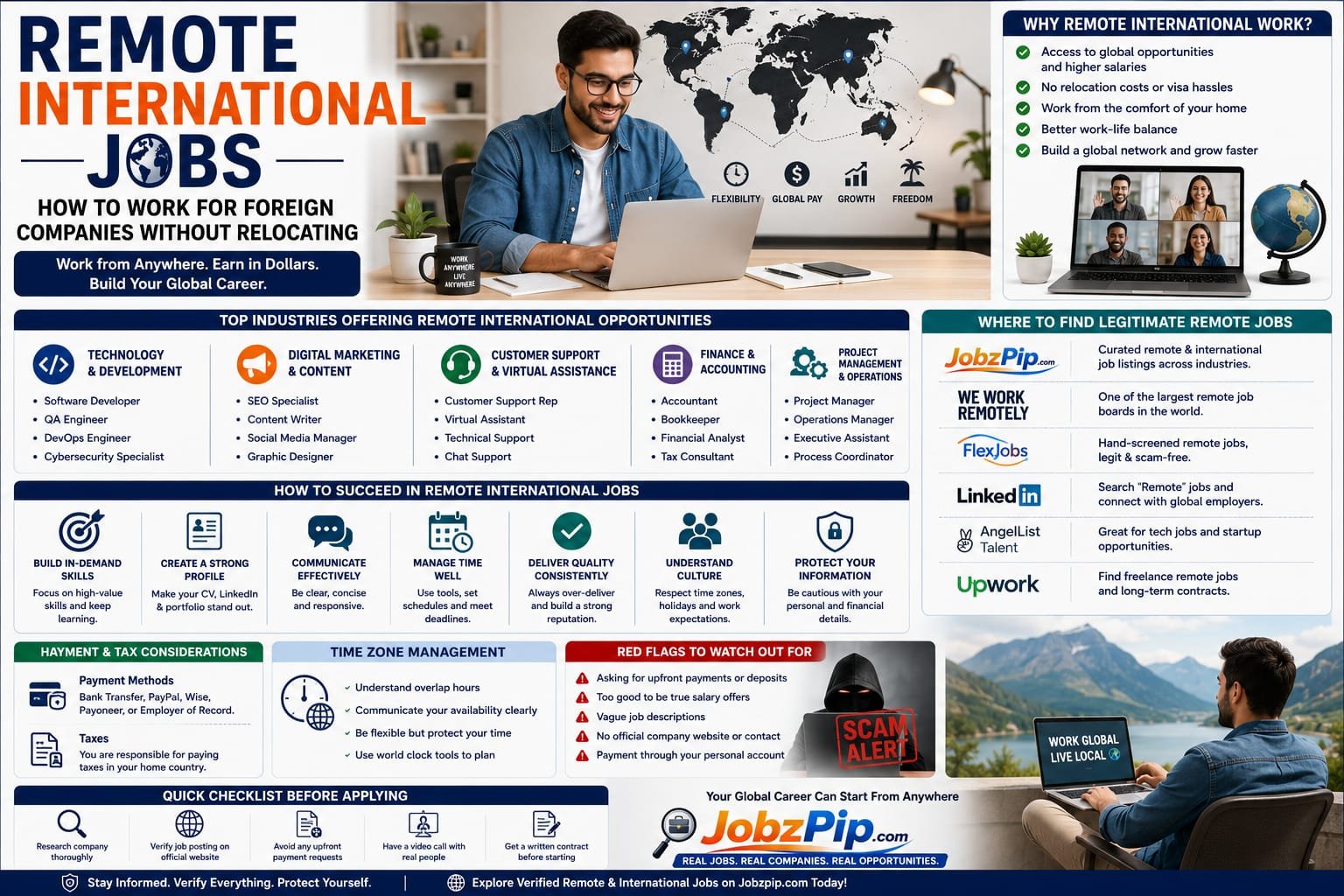
Which Industries Offer the Most Remote International Opportunities
Certain fields are particularly well-suited to remote international work, largely because the work itself is inherently digital and doesn’t require physical presence.
Technology and software development remains the largest category, with companies worldwide hiring remote developers, quality assurance engineers, DevOps specialists, and cybersecurity professionals regardless of their physical location.
Digital marketing and content creation roles, including social media management, SEO specialists, content writers, and graphic designers, are widely available remotely, since the deliverables are entirely digital.
Customer support and virtual assistance roles have expanded significantly, with many companies hiring remote customer service representatives, particularly for roles covering different time zones or languages.
Finance and accounting professionals, particularly those skilled in bookkeeping, financial analysis, and accounting software, are increasingly hired remotely by companies looking to reduce costs while accessing skilled talent.
Project management and virtual operations roles, coordinating teams and processes remotely, have also grown substantially as companies become more comfortable managing distributed teams.
Where to Find Legitimate Remote International Jobs
Finding legitimate remote positions requires slightly different strategies than searching for relocation-based jobs. Dedicated remote work job boards specifically filter for positions open to international, location-independent candidates, saving you time compared to sifting through general job boards where most listings still require local presence.
Freelance platforms allow you to build a portfolio and client base gradually, starting with smaller projects and building toward larger, more stable ongoing contracts with international clients as you establish your reputation and reviews.
LinkedIn remains valuable here too; many companies specifically list remote positions and allow you to filter search results by remote work availability. Following companies known for remote-friendly cultures and engaging with their content can also increase your visibility when they’re hiring.
Building a Profile That Attracts Remote Employers
Remote employers face unique concerns when hiring internationally: they need confidence that you can work independently, communicate clearly across time zones and potentially language differences, and manage your own schedule and deliverables without direct supervision. Your CV and application materials should specifically address these concerns.
Highlight any previous remote work experience explicitly, even informal freelance work. Demonstrate strong written communication skills throughout your application, since this is often the primary way you’ll interact with international colleagues and clients. Mention specific tools and platforms you’re comfortable with, such as project management software, video conferencing tools, and collaborative documents, since familiarity with these reduces onboarding friction for employers.
Understanding Payment and Tax Considerations
One of the more complex aspects of remote international work involves payment logistics and tax obligations. Companies typically pay remote international workers through international bank transfers, specialized payment platforms designed for global payments, or sometimes through intermediary employer-of-record services that handle local compliance on the company’s behalf.
It’s important to understand your own country’s tax obligations regarding foreign income. In most cases, income earned from foreign companies while residing in your home country is still subject to local income tax, even if the paying company doesn’t withhold taxes automatically the way a local employer would. Consulting with a local tax professional, at least in your first year of remote international work, is a wise investment to ensure you remain compliant and avoid unexpected tax issues later.
Overcoming the Time Zone Challenge
Working with international teams often means navigating significant time zone differences, which can affect both your work schedule and quality of life. Some remote positions expect at least partial overlap with the employer’s core business hours, which might mean adjusting your schedule to work evenings or early mornings depending on the specific countries involved.
Before accepting a remote international role, clarify exactly what overlap hours are expected, and honestly assess whether that schedule is sustainable for you long-term. Some roles offer full flexibility with asynchronous communication, while others require consistent real-time collaboration during specific hours.
Standing Out in a Competitive Remote Job Market
Remote international positions often attract applicants from dozens of countries, creating intense competition for quality positions. To stand out, focus on building a strong, specific portfolio that clearly demonstrates your skills rather than relying solely on a traditional CV. For creative and technical roles particularly, a portfolio website or samples of previous work often matter more than formal qualifications alone.
Building a professional online presence, through platforms like LinkedIn or industry-specific communities, also helps establish credibility. Employers are often more comfortable hiring remote international candidates when they can see a consistent professional history and genuine engagement within their industry.
Avoiding Remote Work Scams
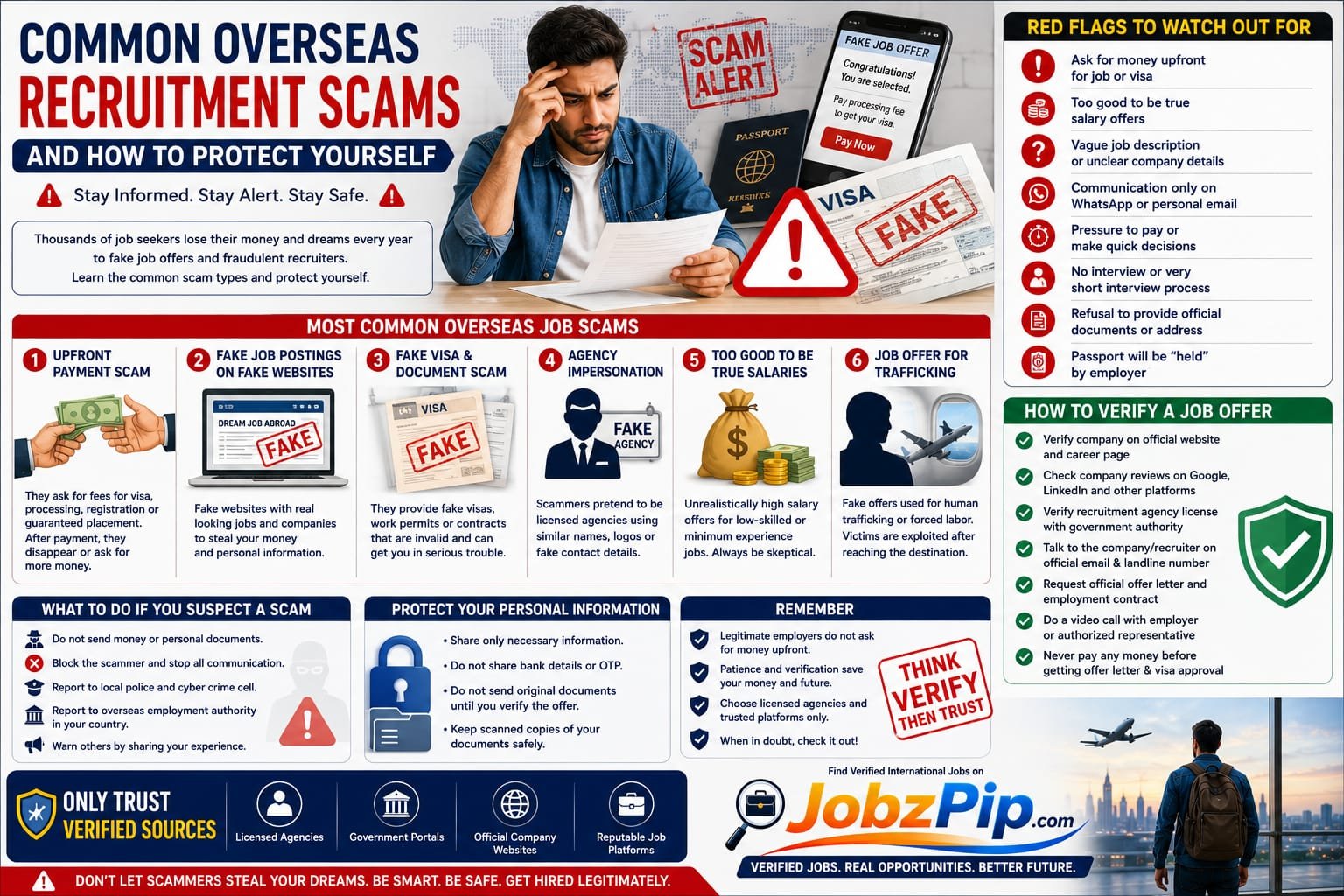
Unfortunately, remote international job scams are also common, often involving fake job offers that ask for upfront payment for training materials or equipment, or schemes that ask you to process payments through your personal bank account, which can inadvertently make you complicit in money laundering schemes without your knowledge. Apply the same verification principles here as with any other overseas job opportunity: research the company independently, be wary of any request for upfront payment, and never agree to receive and forward money through your personal accounts for an employer you haven’t thoroughly verified.
Balancing the Pros and Cons
Remote international work offers genuine advantages: no relocation costs or visa complications, the ability to remain close to family, and access to international salary scales while maintaining a lower cost of living in your home country. However, it also comes with challenges: potential isolation from a physical office culture, time zone difficulties, career growth that can sometimes be slower without in-person visibility within a company, and the need for strong self-discipline to manage your own schedule effectively.
Consider honestly whether your working style and life circumstances suit remote work before committing fully to this path over relocation-based international opportunities.
Final Thoughts
Remote international work has opened a genuinely valuable pathway for skilled professionals to access global opportunities without the significant disruption of physical relocation. Success in this space requires building specific, in-demand skills, presenting yourself professionally to international employers, and understanding the practical realities of payment, tax, and time zone management. For the right person with the right skill set, remote international work offers an excellent balance between career growth and personal stability.
Browse remote and international job listings on Jobzpip and find opportunities that fit your lifestyle and career goals.






Leave a Reply