

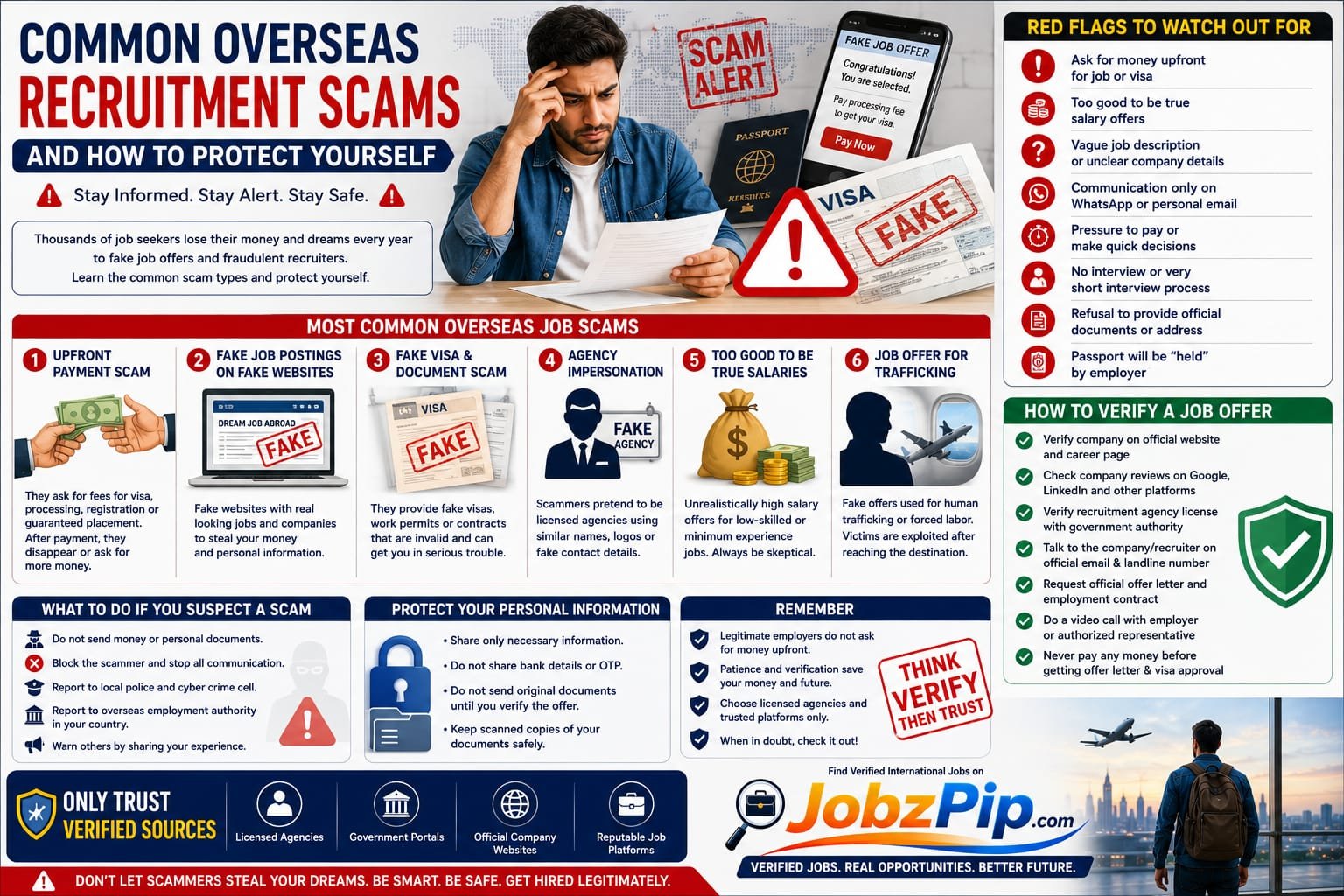
Every year, thousands of hopeful job seekers lose their hard-earned savings, and sometimes far more, to overseas recruitment scams. These scams have grown increasingly sophisticated, often mimicking legitimate companies and processes so convincingly that even careful, educated individuals can fall victim. Understanding exactly how these scams operate is one of the most powerful tools you have to protect yourself and your family. This guide breaks down the most common scam patterns and gives you practical, actionable steps to verify opportunities before you commit any time or money.
Why Overseas Job Scams Are So Common
The desire for a better life abroad is powerful, and scammers know this. They specifically target people who are motivated, sometimes desperate, and often unfamiliar with the specific bureaucratic details of the country they’re hoping to move to. This combination of strong motivation and limited familiarity with the process creates ideal conditions for exploitation. Scammers also take advantage of the genuine complexity of legitimate visa and recruitment processes, using confusing but official-sounding language to make fraudulent schemes seem credible.
The Upfront Payment Scam
This is, by far, the most common type of overseas job scam. A “recruiter” contacts you, sometimes after you’ve submitted your CV to a job board, offering you a fantastic position abroad. After a brief, often superficial screening process, they inform you that you’ve been selected, but you need to pay a fee for visa processing, medical tests, agency registration, or “guaranteed placement” before they can proceed.
Once you pay, one of several things typically happens: the recruiter stops responding entirely, they ask for additional fees claiming complications arose, or they provide fake documents that turn out to be worthless when you attempt to actually travel. Remember the golden rule: legitimate employers and licensed agencies in regulated markets do not require large upfront payments from candidates before an offer and proper documentation are in place.
Fake Job Postings on Legitimate-Looking Websites
Scammers frequently create professional-looking websites, sometimes even copying the branding and design of real companies, to post fake job openings. These sites can be remarkably convincing, complete with fake employee testimonials, professional photography, and detailed (but entirely fabricated) job descriptions.
To protect yourself, always verify a company independently rather than trusting the website where you found the job listing. Search for the company’s official website separately through a search engine, check if the job is also listed on their genuine careers page, and look for the company on LinkedIn to see if real employees with consistent work histories are associated with it.
The Fake Visa and Document Scam
In this scheme, scammers provide victims with fraudulent visa stickers, fake work permits, or counterfeit employment contracts that appear convincing but have no legal validity. Victims sometimes only discover the documents are fake upon arrival at the destination airport, where they’re denied entry, or in worse cases, after arriving and beginning “employment” only to find no legitimate job or sponsor actually exists.
Always verify visa documents independently through official government channels before traveling. Many countries offer online visa verification systems where you can check the validity of a visa number directly through official government websites.
Recruitment Agency Impersonation
Scammers sometimes impersonate real, licensed recruitment agencies, using a similar name, logo, or even hacked communication channels to appear legitimate. They might contact you claiming to represent a well-known agency, using slightly altered contact details or fake branch offices.
Always verify any recruitment agency directly through their official contact information, found independently rather than provided by the person contacting you, and check their license status with the relevant government regulatory body in your home country.
The “Too Good to Be True” Salary Offer
Be genuinely skeptical of job offers promising unusually high salaries for minimal experience or qualifications. While legitimate high-paying opportunities do exist, particularly for specialized skills, an offer significantly above the typical market rate for a role, especially combined with minimal interview screening, should raise immediate red flags. Scammers use inflated salary promises specifically because they know how effective this bait is for job seekers eager for better financial opportunities.
Fake Job Offers for Trafficking or Exploitation
This is the most serious and dangerous category of overseas job scam. In extreme cases, fraudulent job offers are used as a front for human trafficking or severe labor exploitation, where victims arrive abroad only to have their passports confiscated and be forced into unpaid or severely underpaid labor, sometimes in entirely different industries than what was promised, with no ability to leave.
Warning signs include recruiters who are evasive about specific job details, contracts that seem deliberately vague, pressure to travel immediately without adequate time to review documents, and any suggestion that your passport will be held by your employer “for safekeeping” upon arrival. Legitimate employers do not confiscate passports, and this practice is illegal in most countries, regardless of what you might be told.
How to Verify a Job Offer Before Proceeding
Before accepting any international job offer or making any payment, take these concrete verification steps. Search the company name along with terms like “scam,” “reviews,” or “complaints” to see what others have experienced. Check the company’s official website and confirm the job listing appears there as well. Verify any recruitment agency’s license number directly with your home country’s overseas employment regulatory body. Request a formal written contract and review it carefully, ideally having someone knowledgeable review it with you if anything seems unclear. Insist on a video call with your prospective employer or recruiter rather than relying solely on text or email communication.
What to Do If You Suspect a Scam
If something feels off about a job offer, trust that instinct and slow down. Do not send any money or sensitive personal documents until you’ve completed independent verification. If you’ve already been targeted or have lost money to a scam, report it immediately to your local police, your country’s overseas employment regulatory authority, and the relevant cybercrime reporting agency if the scam occurred primarily online. While recovering lost funds can be difficult, reporting scams helps authorities track patterns and potentially prevent others from falling victim to the same scheme.
Protecting Your Personal Information
Be cautious about how much personal information you share during the early stages of a job application. While employers legitimately need certain documents like your CV and eventually your passport details for visa processing, be wary of requests for highly sensitive information, like bank account details or copies of documents unrelated to standard employment processing, particularly early in the process before any formal offer has been made.
Final Thoughts
Overseas recruitment scams succeed by exploiting hope, urgency, and unfamiliarity with foreign systems. The best protection is knowledge: understanding exactly how legitimate recruitment processes work, knowing the common red flags, and taking the time to independently verify every opportunity before committing money or sensitive information. It can feel frustrating to slow down and verify things when you’re excited about an opportunity, but this patience is precisely what separates successful, safe overseas job placements from painful, costly scams.
Stay informed, stay cautious, and remember that genuine opportunities, while requiring patience and proper verification, are absolutely out there for well-prepared job seekers.
Jobzpip only features verified, legitimate international job opportunities. Browse our current listings with confidence.







Leave a Reply