

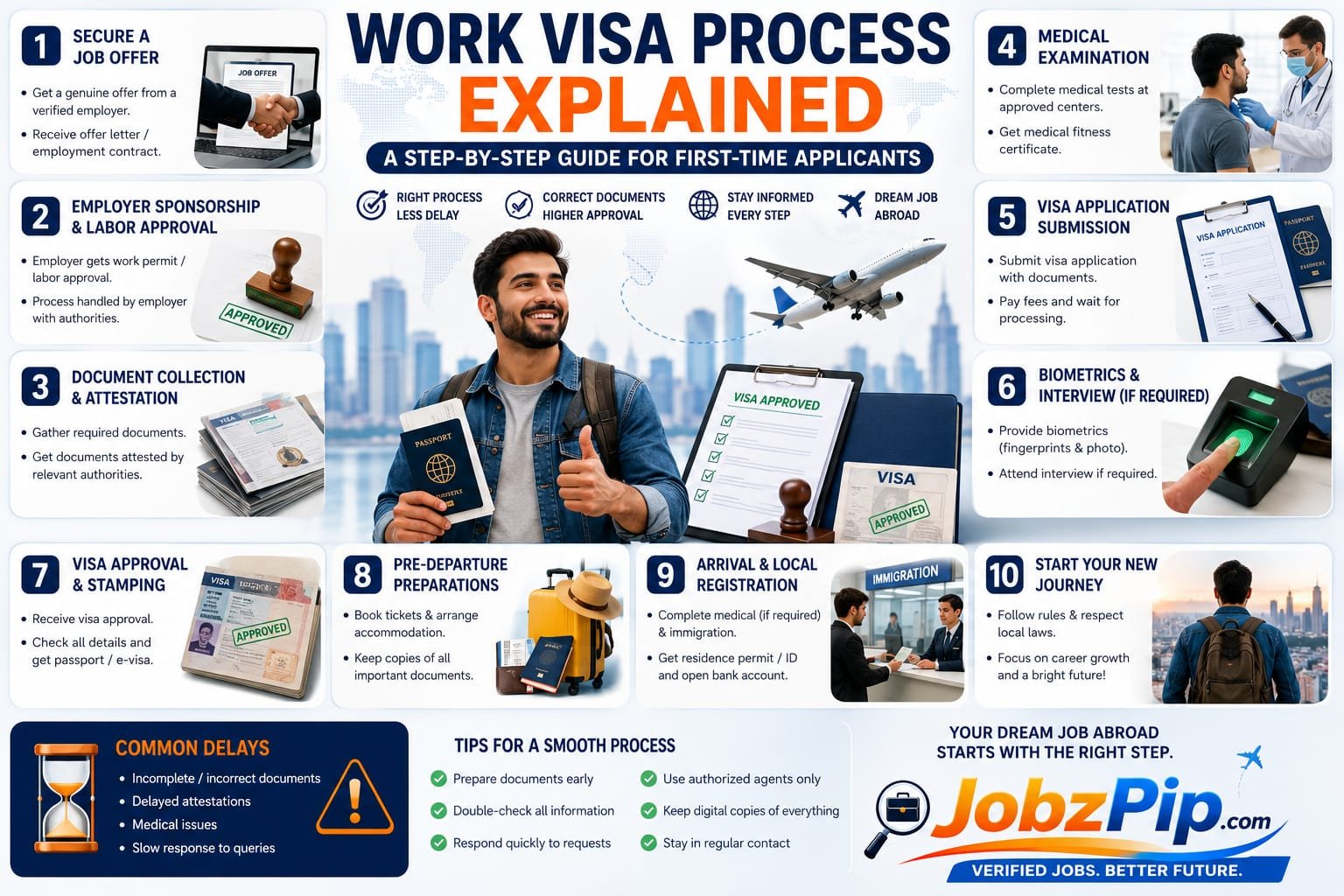
For first-time applicants, the work visa process can feel like a maze of confusing terminology, endless paperwork, and uncertainty about what happens next. Between medical tests, document attestation, embassy appointments, and waiting periods, it’s easy to feel overwhelmed. The good news is that once you understand the general structure of the process, it becomes far less intimidating. While specific requirements vary by country, most work visa processes follow a similar overall sequence. This guide walks you through each stage in plain, practical language.
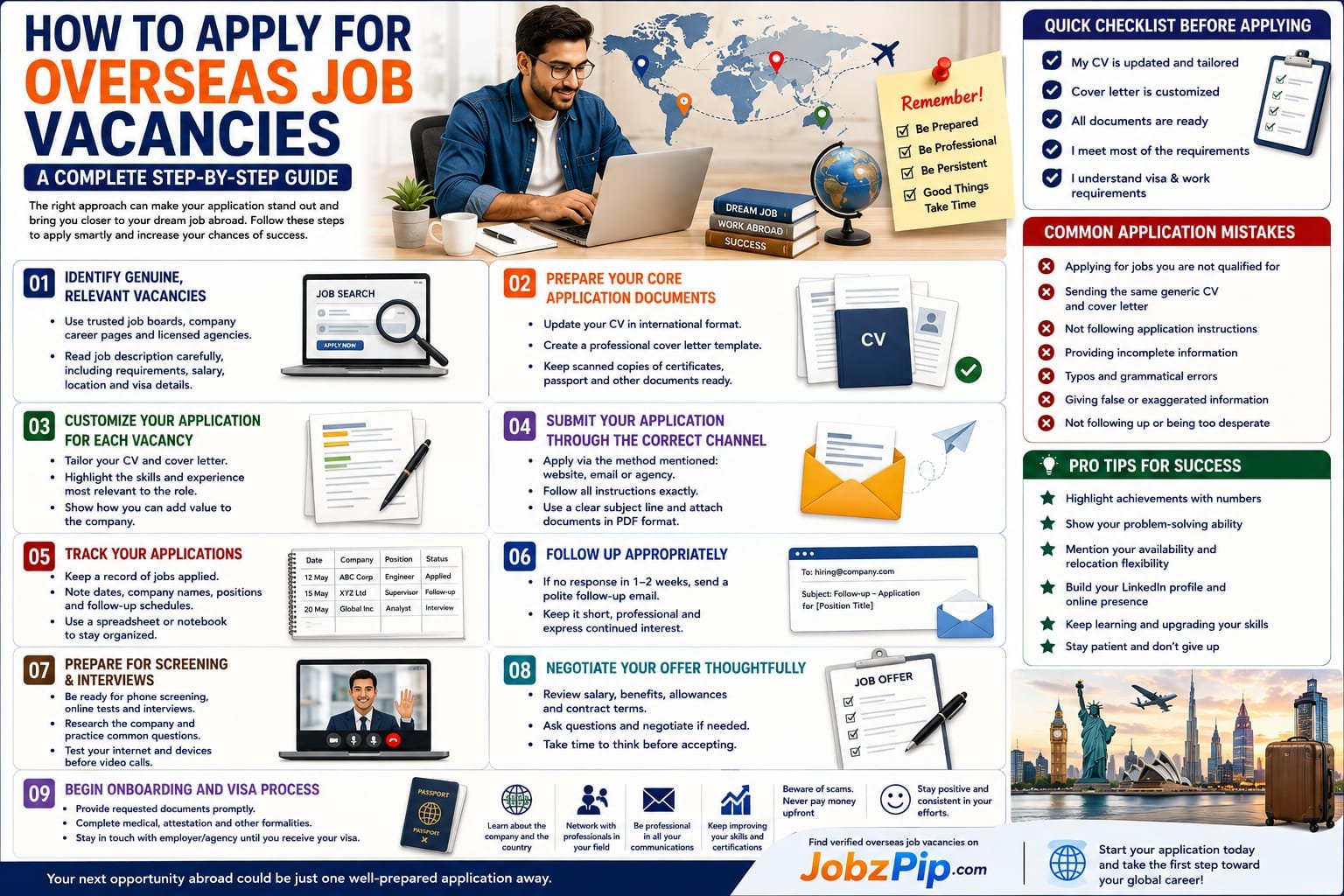
Step 1: Secure a Genuine Job Offer
Everything starts with a real, verifiable job offer from an employer authorized to hire foreign workers. In most countries, individuals cannot simply apply for a work visa on their own; the process is employer-driven. This means the company must typically demonstrate that they were unable to fill the position locally, or that the role qualifies under a specific skilled migration category, before they can sponsor a foreign worker.
Once you accept a job offer, you should receive a formal offer letter or employment contract detailing your salary, job role, contract duration, and other benefits. Read this document carefully before signing, and don’t hesitate to ask questions about anything unclear, particularly around probation periods, termination clauses, and what happens if you want to change employers later.
Step 2: Employer Sponsorship and Labor Approval
After you accept the offer, your employer typically needs to obtain approval from their own government’s labor or immigration department to hire you. In Gulf countries, this often involves the employer obtaining a work permit or labor quota approval before your visa application can even begin. In countries like Canada, this might involve a Labour Market Impact Assessment, which proves that hiring a foreign worker won’t negatively affect the local job market.
This stage is entirely handled by the employer, and as the applicant, there’s usually little for you to do here except wait and stay in communication with your employer or their recruitment agency.
Step 3: Document Collection and Attestation
While your employer works on their end, you’ll need to start gathering your own documents. This typically includes:
- A valid passport with sufficient remaining validity, usually at least six months beyond your intended travel date
- Educational certificates and transcripts
- Professional certifications or licenses relevant to your job
- Police clearance certificate from your home country
- Passport-sized photographs meeting the destination country’s specifications
- Marriage certificate, if you intend to bring dependents
Many countries require your educational and professional documents to be attested, meaning officially verified and stamped by relevant government authorities, sometimes including your home country’s foreign affairs ministry and the destination country’s embassy. This process can take anywhere from a few days to several weeks depending on your country and the number of documents involved, so it’s wise to start this early rather than waiting until the last minute.
Step 4: Medical Examination
Most countries require a medical fitness examination before issuing a work visa, particularly Gulf countries and many parts of Asia. This typically involves a general physical examination, blood tests for communicable diseases, chest X-rays, and sometimes additional tests depending on the destination and job type. These exams must usually be conducted at government-approved medical centers; results from unauthorized clinics are typically not accepted.
If your medical results come back unfit for any reason, some countries offer a retest process, but certain conditions may disqualify you from specific visa categories altogether. It’s worth understanding your destination country’s medical requirements in advance if you have any known health conditions.
Step 5: Visa Application Submission
Once your documents are ready and your employer’s sponsorship approval comes through, you or your recruitment agency will submit the actual visa application. This usually involves filling out detailed application forms, paying the applicable visa fee, and submitting your documents either online through an official immigration portal or in person at an embassy, consulate, or visa application center.
Processing times vary enormously depending on the country and visa category. Gulf country work visas can sometimes be processed within a few weeks, while points-based systems in Canada, Australia, or the UK can take several months to over a year, particularly for permanent residency pathways.
Step 6: Biometrics and Interview (If Required)
Many countries now require biometric data collection, including fingerprints and photographs, as part of the visa process. This is often done at a designated visa application center in your home country. Some visa categories, particularly for higher-skilled roles or certain countries, may also require an in-person or video interview as part of the verification process.
Step 7: Visa Approval and Stamping
Once your application is approved, your passport will be stamped with the visa, or in many modern systems, you’ll receive an electronic visa linked to your passport number. Double-check every detail on your visa once issued, including your name, passport number, visa validity dates, and visa category, since even small errors can cause serious problems at the airport or later during your stay.
Step 8: Pre-Departure Preparations
With your visa in hand, it’s time to prepare for the actual move. This includes booking your flight, arranging initial accommodation if not provided by your employer, understanding what you’re allowed to bring in terms of luggage and restricted items, and gathering physical and digital copies of all your important documents, including your visa, passport, employment contract, and medical certificates.
It’s also wise to research basic information about your destination country before arrival: local customs, weather, currency, emergency contact numbers, and your embassy’s contact details in that country. Having a local contact, whether a colleague, friend, or your employer’s designated representative, can make your first few days significantly smoother.
Step 9: Arrival and Local Registration
Upon arrival in most countries, there are additional administrative steps to complete. This often includes a medical check at the port of entry in Gulf countries, registration with local authorities, obtaining a residence permit or ID card, and opening a local bank account for salary payments. Your employer typically guides you through this process, particularly for the first time.
Common Delays and How to Avoid Them
The most common causes of delays in the work visa process include incomplete or incorrectly filled forms, unattested or improperly attested documents, medical test discrepancies, and slow response times from applicants when additional information is requested. You can minimize delays significantly by double-checking every form before submission, responding promptly to any requests from your employer or the immigration authority, and keeping digital copies of every document so you can quickly resend anything if needed.
Understanding Visa Types
Not all work visas are the same. Some are tied strictly to a single employer, meaning you cannot legally work for anyone else without transferring your visa or obtaining a new one. Others, particularly in countries like Canada and Australia under certain skilled migration streams, offer more flexibility and may even come with a pathway to permanent residency. Understanding exactly what type of visa you’re being offered, and what rights and restrictions come with it, is essential before accepting any overseas job offer.
Final Thoughts
The work visa process can feel long and bureaucratic, but it exists to protect both workers and host countries by ensuring proper documentation and legal employment. Understanding each stage in advance helps you prepare your documents early, avoid unnecessary delays, and know what to expect at every point in the journey. Patience and organization are your best tools here. Keep clear records of every document you submit, follow up regularly with your employer or agency, and don’t hesitate to ask questions when something is unclear.
Once you make it through the process, the reward is a legitimate opportunity to build a new chapter of your career abroad, backed by proper legal protections and a clear employment relationship.
Ready to start your visa journey? Explore verified international job listings on Jobzpip and take the first step toward your offer letter today.

Leave a Reply