I’ve spent a large chunk of this year so far building scaffolding to use around Claude Code, so it behaves like a project manager rather than a team of eager interns. These tools break big jobs down into chunks, hand sub-tasks to fresh agent sessions, and run verification passes before anything is marked as done. Claude Code introduced a goal command that approximates scaffolding natively. But it doesn’t work so well for non-coding tasks or for controlling other hardware via MCP, so the scaffolding stays.
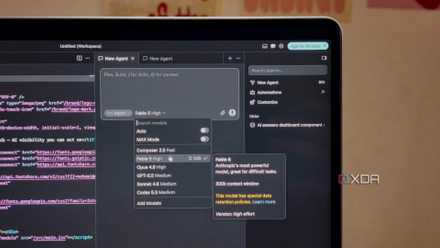
I thought I had the long-horizon problem mostly solved (at least for the things I do), but then Anthropic shipped Fable 5, which handles long tasks just as well as the things I built, without me telling it to. While it was yanked off the market by the government, it’s back now —with one small wrinkle: it’s only included in Claude’s plans until July 7. After that, it goes into the API billing side of things, and the tasks you’ll want to use it for will become expensive. So I’m taking full advantage while I can, and so should anyone else with a subscription.

I connected Claude to my Proxmox cluster through MCP, and it now creates VMs from conversations
This might just be my favorite way to use Proxmox
Planning across stages is the whole point
The scaffolding I built by hand is now table stakes
Every agentic workflow I’ve created was to fix the three main problems with agentic coding. The model loses the plot on long tasks; it tries to do everything in a single context window and never doubts itself. That’s the same with any agentic harness, so I built a series of external fixes, YAML stage definitions, sub-agent handoff rules, and mandatory review steps. They work, but they take a lot of time to maintain, and every new project means more tweaking.
Fable 5 attacks all three issues at the model level. Anthropic says that when you run Fable in a harness like Claude Code or Managed Agents, it can run for days at a time, breaking the task into stages, spinning up sub-agents for the chunks, and verifying results before moving on. Exactly what I spent days and days setting up. And that’s exactly why I’m about to spend the next week heavily testing how far I can push it, while making Fable rewrite the scaffolding I already have in place.
Fable runs for days, which changes the whole equation
Multi-day agentic sessions are a different type of trust

The tasks that I’d previously trusted agents with were smaller ones. Things like generating a Terraform export of my Proxmox infrastructure, auditing DNS records, refactoring code, and formatting YAML. Any task longer than that warranted babysitting, because drift was inevitable, and sometimes it would get stuck in loops trying to fix the same problem twenty different ways.
Fable is different, designed for the long tail of projects, the things I actually care about. Sure, Claude helps with the quick fixes too, but I stop short of letting it migrate an entire Proxmox cluster’s worth of VMs to a new storage backend. That’s a complex task involving dependency ordering, taking snapshots, verifying that the snapshots happened correctly, and moving workloads in a way that doesn’t take down DNS or any other load-bearing VMs on my machine. I’m wary of doing it manually because I’ve broken my network more times than I can count.
But if Fable can keep a structured workflow in memory over multiple days? That might just be able to do the migrations for me, after it’s written a plan, created the Ansible and Terraform resources to handle things within scaffolding I already use, and run the process in test mode to verify that it should work.

I built repeatable agentic AI workflows that code without me, and the results surprised me
All my agents needed was a little bit of codified workflows to follow
Anthropic benchmarked it on Factorio
AI factory, meet the actual factory
One of the things buried in the Claude Fable 5 launch materials was that Anthropic tested the model by having it autonomously play Factorio. I noticed it because I’ve become rather hooked on the game lately. It’s an exercise in real-world frustration, with resource allocation always being a problem, throughput bottlenecks, and dependency chains that punish short-term thinking.
The exact short-term thinking that lesser models will get stuck in. This game is a better benchmark for long-horizon thinking than any coding test I can think up, with a very real consequence for failure. You get eaten by biters. Success in the game needs the same type of thinking and multi-stage planning that any good coding project requires, and Fable 5 can handle both.

This Linux distro does one thing and does it perfectly: run Factorio faster than anything else
The Linux kernel yearns for the mines
The safeguards might get in your way
Fable 5 ships with the heaviest guardrails it has ever applied to a model

There is one big proviso to using Fable 5, and it’s not the limited time you have to use it on the subscription. Anthropic had to add plenty of safeguards to be able to re-release Fable, and that might stop you from using it. If your query gets classified as cybersecurity or biology, it’ll get routed to Opus 4.8 instead, and there are probably other topics that aren’t allowed.
That’s going to limit what it can do in my home lab because so many things touch on cybersecurity. Firewall rules, VLAN segmentation, hardening a reverse proxy, and plenty of other tasks will likely get shunted to Opus 4.8. Once it’s moved to usage credits rather than being 50% of my subscription allowance, it’ll become too expensive to reach for even if I get stuck.
The thing is, those smaller tasks can be done with a local LLM. Fable excels at planning work, not the nitty-gritty. Writing plans for server migration using Terraform, Ansible, and similar tools won’t trigger the safeguards, and the smaller things I can handle.
It turned out better than I thought.
I’m taking this week to improve my YAML scaffolding with Fable
While I still have access to Fable through my subscription, I’m taking every minute to handle the high-level planning tasks I’ve been putting off. Things like setting up my Ubiquiti stack, because with MCP access I can make Claude do the heavy lifting for me, translating my existing network setup into Ubiquiti’s configuration files. Things like building more scaffolding for when I don’t have access again, so I can still handle long-horizon tasks with smaller models.